
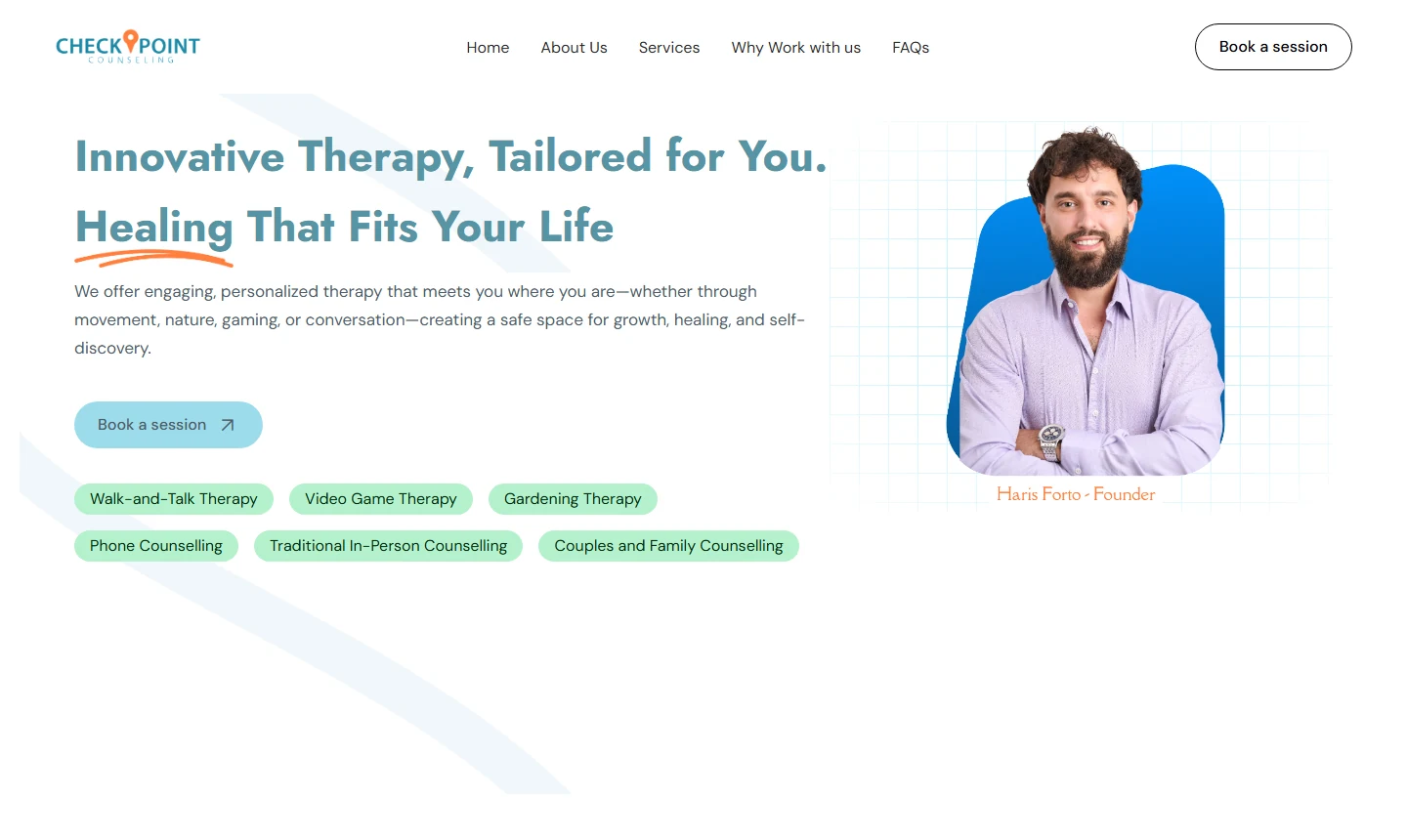
01The problem
Checkpoint offers walk-and-talk therapy, gardening therapy and video game counselling alongside phone, in-person and couples counselling. Three of those are unfamiliar to most people.
Nobody books a session they cannot picture. The barrier was not price and it was not availability. It was a visitor reaching the end of the page still unsure what gardening therapy actually involves, and closing the tab rather than asking.
02What was built
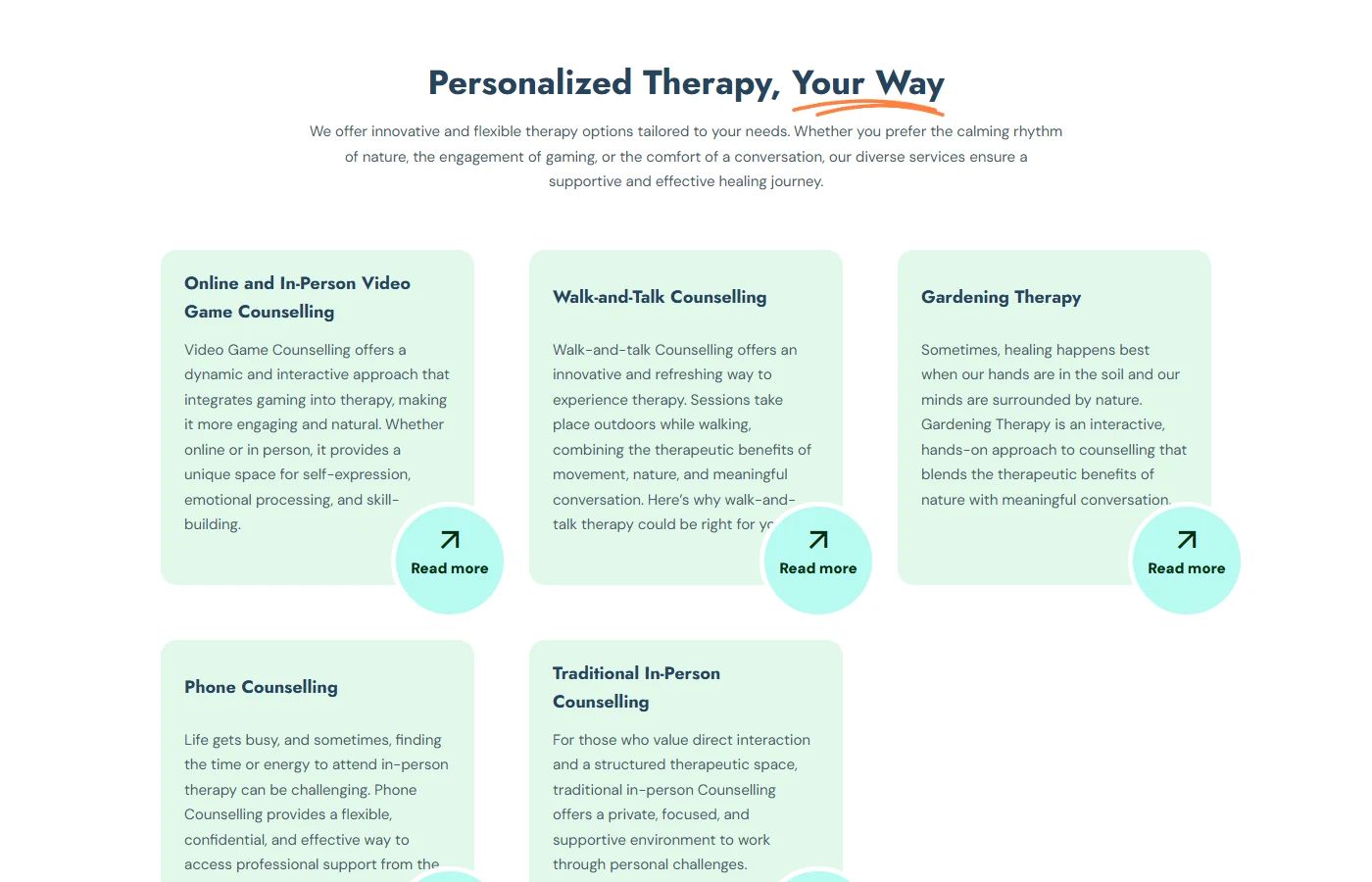
Every option explained on its own terms
Each of the six counselling options got its own card and its own detail page setting out what a session looks like, who it suits and why it works. The unfamiliar options get the most explanation, because they need it.
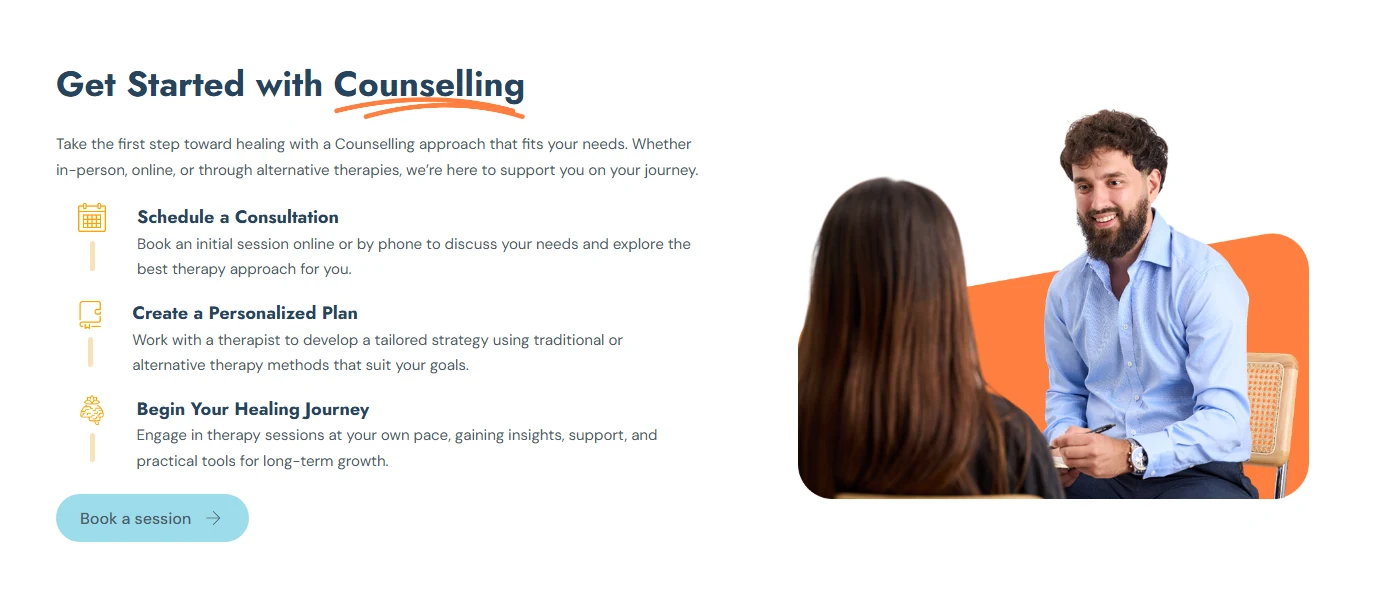
What happens after you book
A three step section sets out the process from first contact to first session. This removes the most common reason people stall, which is not knowing what they are walking into.
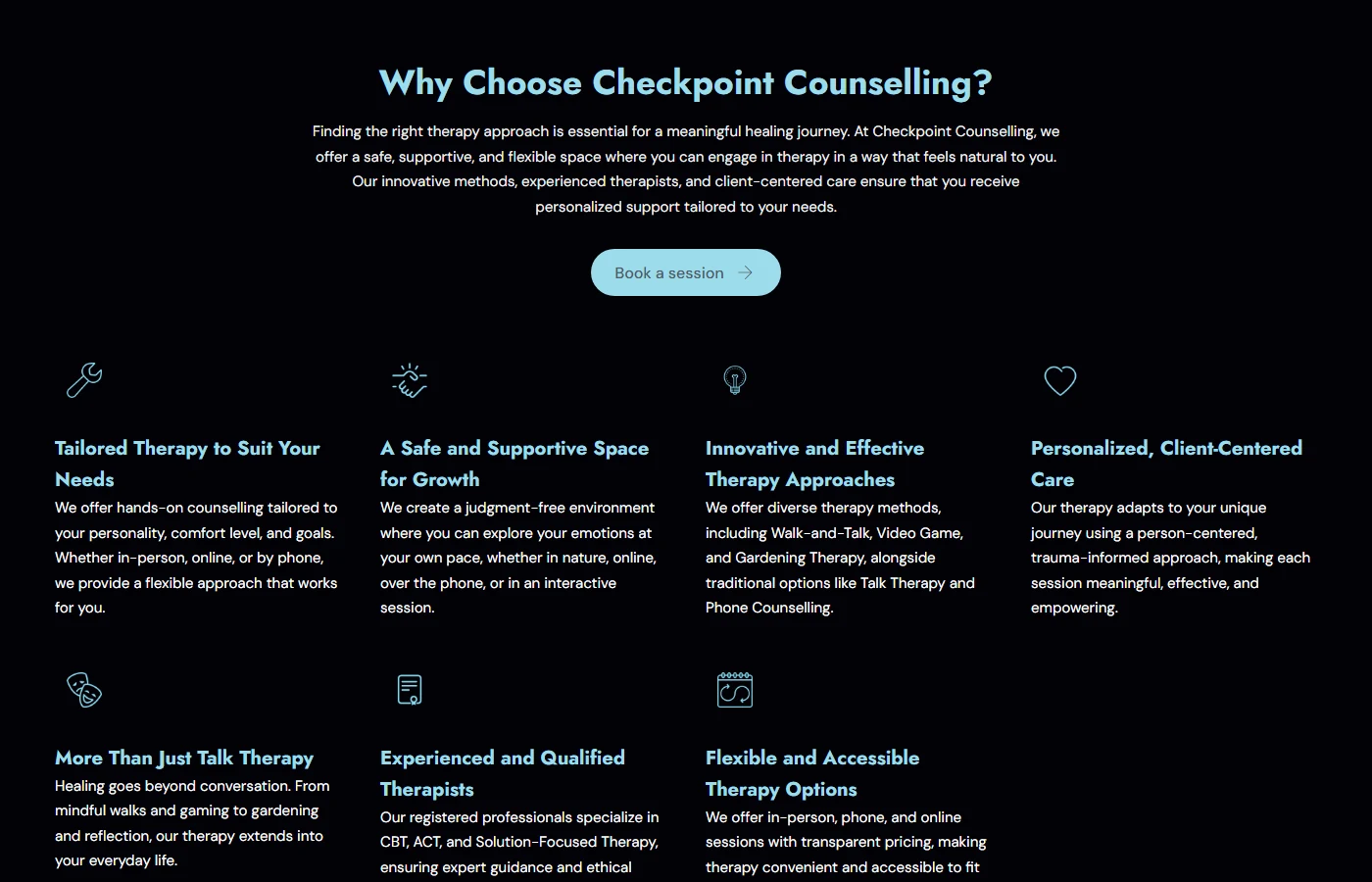
Reasons to choose this practice
A benefits section answers the comparison question directly, for a visitor weighing this practice against the others they have open in another tab.
On a phone
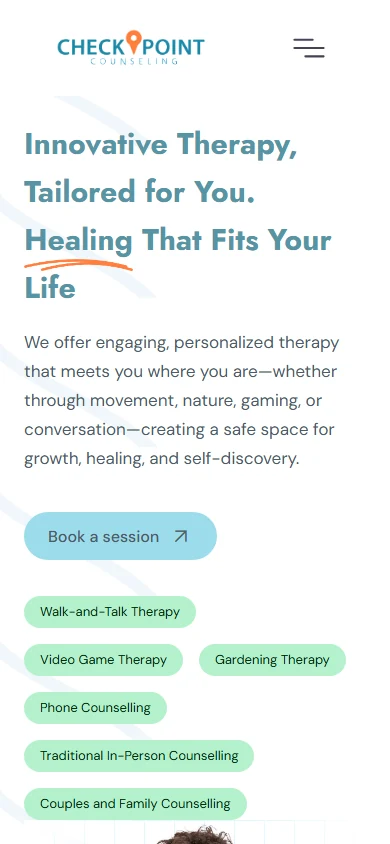
Most visitors arrive on a phone, so the layout was built for that width first and widened out, rather than the other way round.
03The outcome
The website explains all six therapy options, including walk-and-talk, gardening and video game counselling, and outlines what to expect when starting. Visitors can understand the available approaches before making contact, while the practice has a clear way to guide a prospective client toward an appropriate next step.
What the client gained
People can read about the different ways we work before they contact us. It gives them space to think about what might suit them, and helps us start the first conversation with a little more context.
People can read about the different ways we work before they contact us. It helps them think about what might suit them and gives us a better starting point for the first conversation.
CEO, Checkpoint Counselling